
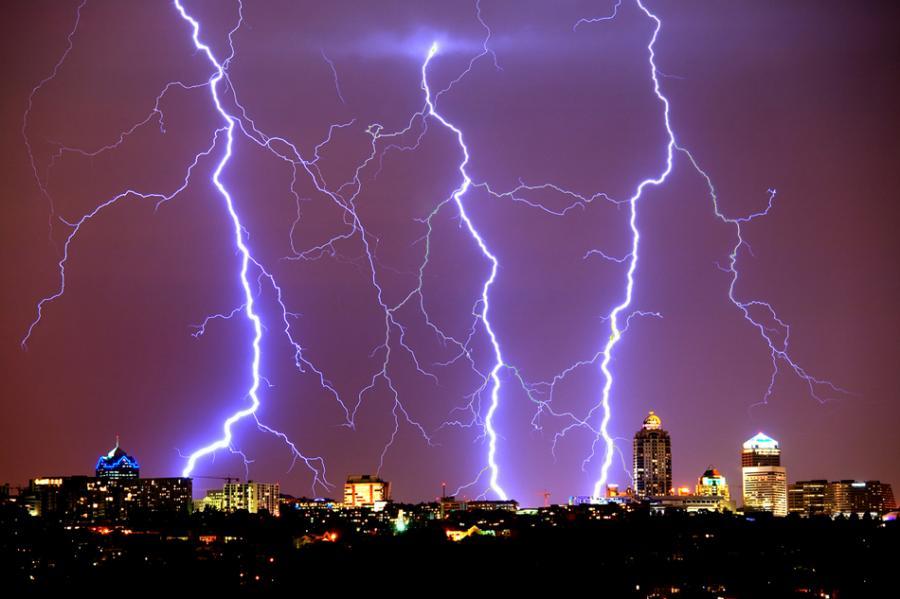
Lightning phenomenon


Lightning phenomenon

In a typical thundercloud, the upper part, made of ice crystals, is generally positively charged, while the lower part, made of water droplets, is negatively charged. By influence, the lower part of the cloud leads to the development of charges of opposite signs (therefore positive on the part of the ground which is nearby). Electrical exchanges occur inside this cloud, but also between different clouds of the same nature. We then see lightning. However, the cumulonimbus also behaves like a gigantic cloud-to-ground plane capacitor.

Lightning Risk

Lightning Risk


Lightning can ignite fires, destroy structures, fry electronics, disrupt communications, and threaten lives. Installing air terminals, surge protection, and equipotential bonding is essential to protect people, property, and operations—and to comply with safety standards.

Read More
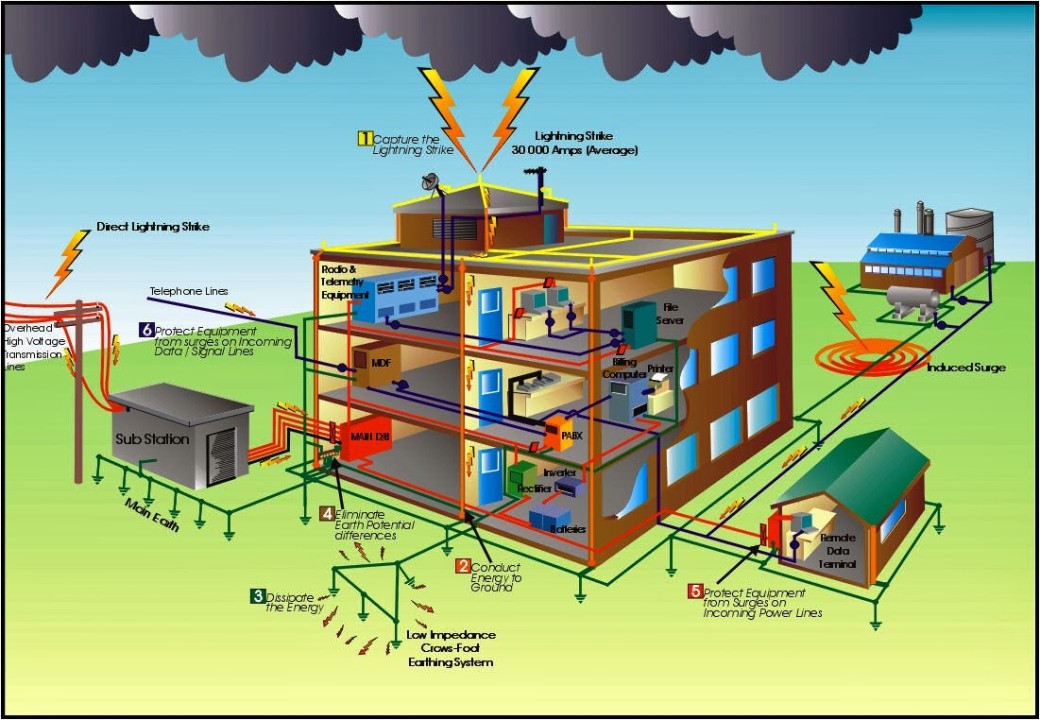
Lightning Desc

Lightning Desc


Lightning Desc is a field for recording a description of a lightning event, including date & time, location, type, estimated current, and impact, used to track and prevent future lightning hazards.

Read More
Lightning Protection

Lightning Protection


A lightning conductor protects a structure from direct lightning strikes. The conductor is installed externally at the highest point of the structure and serves to intercept strikes that might hit it directly.

Read More